
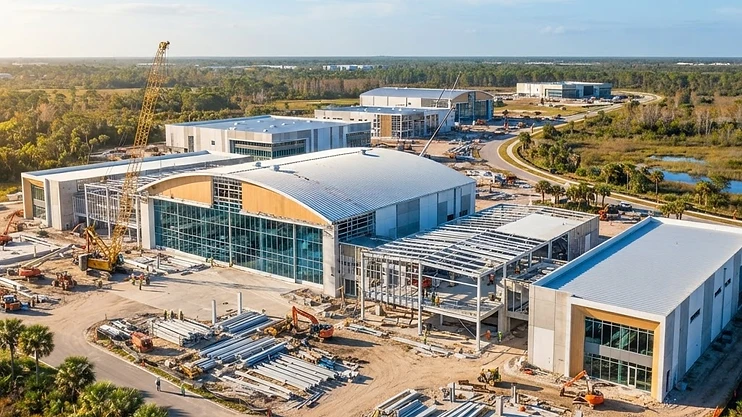
This project is not just about building new hangars; it is about creating a dedicated ecosystem where the next generation of space technology can be designed, tested, and manufactured at scale.
For two decades, the land at the Space Coast Regional Airport in Titusville sat empty, a quiet reminder of a different era in Florida's industrial history. Today, that same land is the site of the Space Coast Innovation Park, a 50-acre development that represents the future of the region's aerospace and defense manufacturing. This project is not just about building new hangars; it is about creating a dedicated ecosystem where the next generation of space technology can be designed, tested, and manufactured at scale. The groundbreaking of this park is a clear signal that the Space Coast is moving beyond its role as a launch site and into its new identity as a global manufacturing hub.
This development is a direct response to the unprecedented demand for aerospace infrastructure in the region. As companies like SpaceX, Blue Origin, and Relativity Space continue to expand their operations, the need for specialized facilities—those that can handle everything from satellite integration to rocket manufacturing—has become critical. Titusville, with its proximity to the Kennedy Space Center and its access to major transportation corridors, is perfectly positioned to meet this demand. The park is designed to be a three-phase hub, eventually providing 1 million square feet of workspace, including office space, hangars, and testing facilities.
This matters because it addresses the 'infrastructure bottleneck' that has historically limited the growth of the aerospace sector. By providing a ready-to-use, purpose-built environment, the Space Coast is lowering the barrier to entry for both established defense contractors and agile startups. This is a strategic investment in the region's long-term economic competitiveness, ensuring that the Space Coast remains the premier destination for aerospace innovation for decades to come. The success of this park will be a key indicator of the region's ability to scale its industrial base to meet the demands of the 21st-century space economy.
What happened
The groundbreaking of the Space Coast Innovation Park in Titusville marks a significant milestone in the region's industrial development. The project, a partnership between Florida Commerce, Space Florida, and the Florida Department of Transportation, is designed to bring 1,500 to 2,000 high-tech jobs to north Brevard County. The land, owned by the Titusville-Cocoa Airport Authority, had been unused for 20 years before this initiative. The park is planned as a three-phase development, with the first phase focusing on the construction of essential infrastructure and the first wave of manufacturing facilities. The $15 million grant from the Florida Department of Transportation's Spaceport Improvement Program was a critical catalyst for the project, allowing the airport to make the necessary improvements to attract aerospace companies. This investment is part of a larger, multi-billion dollar effort to shore up private aerospace investment in Florida, ensuring that the state has the facilities to support the current and future needs of the space industry. The project has already attracted significant interest from supply chain companies, defense contractors, and aerospace firms looking to establish a presence near the Kennedy Space Center.
Why it matters
The deeper consequence of the Space Coast Innovation Park is the creation of a 'manufacturing cluster' that will define the region's economic future. By concentrating aerospace and defense companies in a single, purpose-built location, the park will foster collaboration, innovation, and supply chain efficiency. In two to three years, we expect to see this park become a hive of activity, with companies sharing resources, testing facilities, and talent. This will structurally change the local economy, moving it away from a reliance on individual, large-scale projects and toward a more diversified and resilient industrial base. The threat, however, is the potential for the park to become a 'silo' if it does not integrate effectively with the broader community and the existing aerospace infrastructure. The long-term success of the park depends on its ability to attract a diverse range of companies, from small startups to large defense contractors, and to provide the specialized services they need to thrive. If successful, the park will be the cornerstone of a new, high-tech industrial corridor that stretches from Titusville to Melbourne, cementing the Space Coast's position as the global leader in aerospace manufacturing.
The breakdown
- Strategic location: The park's location at the Space Coast Regional Airport, just 4 miles from I-95 and near the Kennedy Space Center, is a massive competitive advantage. This proximity to both transportation and launch infrastructure is exactly what aerospace companies are looking for when they choose a site for their manufacturing operations.
- Public-private partnership: The project is a model of how state and local government can work together to drive economic development. By leveraging state grants and local land assets, the partnership has created a project that is both financially viable and strategically important. This is a blueprint for future infrastructure projects in the region.
- Three-phase development: The phased approach to construction allows the park to scale in response to demand. This is a smart, risk-mitigating strategy that ensures the project remains financially sustainable while providing the flexibility to adapt to the needs of future tenants. It also allows for the gradual build-out of infrastructure, which is more manageable than a single, massive construction project.
- Job creation: The projected 1,500 to 2,000 high-tech jobs will have a significant impact on the local economy. These are not just manufacturing roles; they include engineering, design, and management positions that will attract a highly skilled workforce to north Brevard County. This will drive demand for housing, services, and education, creating a positive feedback loop of economic growth.
- Supply chain hub: The park is designed to attract not just the 'big fish' of the aerospace industry, but also the smaller, specialized suppliers that make up the supply chain. This will create a more robust and self-sufficient local economy, reducing the need for companies to source components from outside the region. This is a critical step toward building a truly integrated aerospace ecosystem.
- Infrastructure-first approach: By focusing on the infrastructure—roads, hangars, testing facilities—before the tenants arrive, the project is removing the biggest hurdle for companies looking to expand. This 'build it and they will come' strategy is a bold bet that is already paying off in terms of interest from potential tenants. It shows a deep understanding of the needs of the modern aerospace industry.
- Long-term vision: The project is a 20-year vision for the region, not just a short-term fix. By reclaiming unused land and investing in high-tech infrastructure, the project is setting the stage for decades of growth. This long-term perspective is what distinguishes the Space Coast from other regions that are focused only on the next quarter's results.
Key takeaways
- The Space Coast Innovation Park in Titusville is a 50-acre, three-phase development designed to be a global hub for aerospace and defense manufacturing.
- The project is a result of a strategic partnership between state and local government, leveraging $15 million in state grants to unlock private investment.
- The park is expected to create 1,500 to 2,000 high-tech jobs, significantly boosting the local economy in north Brevard County.
- The infrastructure-first approach lowers the barrier to entry for aerospace companies, making the region more competitive for new investment.
- The park will serve as a critical node in the regional aerospace supply chain, fostering collaboration and innovation among tenants.
Our view
Most coverage of the Space Coast Innovation Park focuses on the job numbers and the construction timeline, but the real story is the strategic shift toward a 'manufacturing-first' model. We believe that this park will be the catalyst for a new era of industrial growth in Titusville and the surrounding areas. The biggest mistake that observers make is thinking that this is just another business park; it is a specialized, high-tech ecosystem that is being built to meet the specific, demanding needs of the aerospace industry. We expect that within three years, the park will be fully occupied, and the demand for space will lead to further expansions in the area. The winners will be the companies that get in early and take advantage of the specialized infrastructure and the proximity to the Kennedy Space Center. The losers will be the regions that continue to rely on outdated, general-purpose industrial parks that cannot support the complex needs of modern aerospace manufacturing. We believe that the Space Coast is on the verge of becoming the most important aerospace manufacturing hub in the world, and the Titusville project is the cornerstone of that future. The biggest risk is not a lack of demand, but a lack of speed; the region must continue to move quickly to build out the remaining phases of the park to keep pace with the rapid evolution of the industry.
What to do about it
- For aerospace companies: Evaluate the Space Coast Innovation Park as a potential site for your next manufacturing or testing facility. The combination of specialized infrastructure and proximity to the Kennedy Space Center is unmatched.
- For supply chain businesses: Consider establishing a presence in or near the park to be closer to your primary customers. The clustering effect will create significant opportunities for collaboration and growth.
- For local business leaders: Invest in the services and infrastructure that will support the influx of high-tech workers. This includes everything from housing and retail to education and healthcare.
- For investors: Look for opportunities to support the companies that are moving into the park. The growth of these firms will drive demand for a wide range of services and products, creating a ripple effect of economic opportunity.
The bottom line
The Space Coast Innovation Park in Titusville is a transformative project that positions the region as a global leader in aerospace and defense manufacturing. By providing the specialized infrastructure that modern companies need, the park is creating a sustainable, high-tech engine for economic growth. As the project moves through its three phases, it will continue to attract the best and brightest in the industry, cementing the Space Coast's status as the premier destination for aerospace innovation. The future of the region is being built in Titusville, and it is a future that is defined by high-tech manufacturing and long-term industrial success.