
This is not merely a trend of capital allocation; it is a fundamental restructuring of the regional economy.
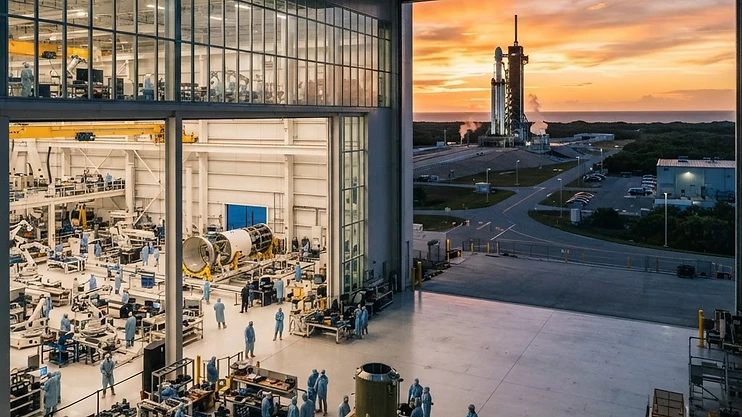
The landscape of American venture capital has undergone a seismic shift in 2026, moving away from the speculative software-as-a-service models of the last decade toward the hard-tech, high-stakes world of defense and aerospace. Nowhere is this transition more visible than in Melbourne, Florida, where the convergence of legacy aerospace giants and agile, AI-driven startups is creating a new, concentrated hub of national security innovation. This is not merely a trend of capital allocation; it is a fundamental restructuring of the regional economy, moving from a service-based model to one defined by sovereign technology and advanced manufacturing.
For decades, the Space Coast was defined by the rhythm of NASA launches and the steady, predictable contracts of prime defense contractors. Today, that rhythm has been disrupted by a surge of private capital, exemplified by firms like Andreessen Horowitz establishing a physical presence in Florida to be closer to the action. The influx of investment is not just about building rockets; it is about integrating software, AI, and hardware at a speed that traditional defense procurement cycles have historically struggled to match. For leaders in Viera, Palm Bay, and Titusville, this represents a once-in-a-generation opportunity to capture the next wave of the industrial base.
This shift matters because it signals the end of the 'Silicon Valley-only' era for high-growth technology. As the geopolitical environment grows more complex, the proximity to launch infrastructure at Kennedy Space Center and the deep talent pool of engineers in Melbourne have become strategic assets. Companies are no longer choosing between the coast and the capital; they are choosing the Space Coast because it is the only place where they can iterate, test, and launch in a single, integrated ecosystem. This is the new reality of the American defense-industrial complex, and it is being written in the boardrooms and hangars of Brevard County.
What happened
The recent announcement that CesiumAstro is investing $25 million into a new Melbourne facility to create 100 high-wage jobs is the latest in a string of major industrial wins for the region. This follows the groundbreaking of the Space Coast Innovation Park in Titusville, a 50-acre site designed to house the next generation of aerospace manufacturing. These developments are not isolated; they are part of a broader, state-backed strategy to solidify Florida as the premier destination for aerospace and defense. According to Space Florida, the state has seen a record-breaking year of over 100 launches, a milestone that has acted as a magnet for private investment. The $1.8 billion SpaceX Starship integration facility at Cape Canaveral is perhaps the most visible symbol of this growth, but the underlying infrastructure—the supply chain, the testing facilities, and the specialized labor force—is what truly anchors these companies to the region. The Economic Development Commission of Florida’s Space Coast has been instrumental in coordinating these efforts, ensuring that the infrastructure, from stormwater management to high-speed connectivity, is ready to support the rapid influx of new manufacturing capacity.
Why it matters
The deeper consequence of this capital influx is the creation of a 'hard-tech' moat around the Space Coast. Unlike software startups that can relocate at the whim of a remote-work policy, these defense and aerospace companies are tethered to the physical infrastructure of the region. This creates a long-term economic stability that is rare in the tech sector. In two to three years, we expect to see a 'clustering effect' where the presence of companies like CesiumAstro and the expansion of L3Harris in Palm Bay will attract a secondary layer of specialized suppliers and AI-software firms. This will structurally change the local economy, shifting the tax base and the labor market toward high-skill, high-wage engineering roles. The threat, however, is to the existing infrastructure and housing market, which must scale rapidly to accommodate this growth. If the region fails to manage the transition from a mid-sized aerospace hub to a global center for defense technology, it risks the same congestion and cost-of-living crises that have plagued other tech hubs. However, if managed correctly, the Space Coast will become the primary engine of American defense innovation.
The breakdown
- Capital concentration: The arrival of major venture capital firms in Florida signals a permanent shift in where defense-tech money is deployed. These firms are looking for proximity to testing grounds, making Melbourne a more attractive destination than traditional tech hubs. This capital is fueling the rapid scaling of companies that were previously limited by slow government procurement cycles.
- Infrastructure readiness: The development of the Space Coast Innovation Park in Titusville is a critical piece of the puzzle. By providing ready-to-use hangars and testing facilities, the region is lowering the barrier to entry for startups. This infrastructure-first approach is what differentiates the Space Coast from other regions that rely solely on tax incentives.
- Talent migration: The demand for specialized aerospace and AI talent is drawing engineers from across the country to Melbourne and Viera. This influx of high-wage earners is driving local economic growth but also putting pressure on housing and services. The challenge for local leaders is to ensure that the quality of life keeps pace with the rapid industrial expansion.
- Supply chain integration: The presence of giants like SpaceX and L3Harris creates a gravitational pull for smaller, specialized suppliers. This creates a robust, localized supply chain that reduces reliance on external vendors. This integration is essential for the rapid prototyping and iteration cycles required in modern defense technology.
- State-level policy support: The partnership between Space Florida, the Florida Department of Transportation, and local authorities has created a streamlined environment for business growth. This coordinated approach to permitting and infrastructure development is a competitive advantage that other states struggle to replicate. It ensures that projects move from concept to construction in record time.
- AI-driven manufacturing: The integration of AI into the production process, as seen in the new facilities in Palm Bay and Melbourne, is transforming the manufacturing floor. This is not just about automation; it is about using data to optimize performance and reliability in mission-critical systems. This technological edge is what makes these companies competitive on a global scale.
- Geopolitical necessity: The global demand for advanced defense technology, particularly in space and hypersonic tracking, is driving the urgency of these investments. The Space Coast is uniquely positioned to meet this demand, making it a critical node in the national security architecture. This ensures that the region remains a priority for federal and private investment for the foreseeable future.
Key takeaways
- Melbourne is becoming a primary hub for defense-tech venture capital, moving beyond traditional aerospace manufacturing.
- Infrastructure projects like the Space Coast Innovation Park are essential for attracting and retaining high-growth startups.
- The region is shifting toward a high-skill, high-wage economy, which will require significant investment in local housing and services.
- Proximity to launch sites and existing defense giants creates a 'hard-tech' moat that protects the local economy from typical tech-sector volatility.
- Coordinated state and local policy is the secret weapon behind the Space Coast's recent industrial success.
Our view
Most coverage of the Space Coast focuses on the 'space' aspect—the rockets and the launches. This misses the real story: the transformation of the region into a sophisticated, AI-integrated defense-manufacturing powerhouse. We believe that the next three years will see a massive consolidation of the defense-tech supply chain in Brevard County. Companies that are currently operating in silos will be forced to integrate or be acquired by the larger players who are already establishing deep roots in Melbourne and Palm Bay. The winners will be the companies that can successfully bridge the gap between agile software development and the rigid requirements of defense hardware. The losers will be the legacy firms that fail to adapt their internal processes to the speed of the new, venture-backed entrants. We expect the Space Coast to become the most important region in the country for the intersection of AI and aerospace, effectively becoming the 'Silicon Valley of Defense.' The biggest risk is not a lack of capital, but a lack of workforce capacity; the region must double down on technical education and vocational training to ensure that the local population can fill these high-wage roles. If they succeed, the economic impact will be transformative.
What to do about it
- For business leaders: Evaluate your supply chain for potential integration with the growing defense-tech cluster in Melbourne. The proximity to major players like SpaceX and L3Harris offers unique opportunities for partnerships and sub-contracting.
- For technical leaders: Invest in AI-driven manufacturing and digital twin technologies. The regional focus is shifting toward Industry 4.0, and companies that can demonstrate these capabilities will have a significant competitive advantage in securing local contracts.
- For local policymakers: Prioritize infrastructure development that supports high-density, high-tech employment. This includes not just physical infrastructure like roads and hangars, but also digital infrastructure and workforce development programs.
- For investors: Look beyond the headline-grabbing launch companies and focus on the 'picks and shovels' of the defense-tech ecosystem. The companies providing the specialized software, materials, and testing services are the ones that will benefit most from the long-term growth of the region.
The bottom line
The transformation of Melbourne and the Space Coast into a premier defense-tech hub is not a temporary trend but a structural realignment of the American industrial base. By combining legacy aerospace expertise with modern, AI-driven innovation, the region has secured its place at the center of national security strategy. As capital continues to flow into the area, the focus must shift toward sustainable growth and workforce development to ensure long-term success. The Space Coast is no longer just a place to launch rockets; it is the place where the future of defense technology is being built.